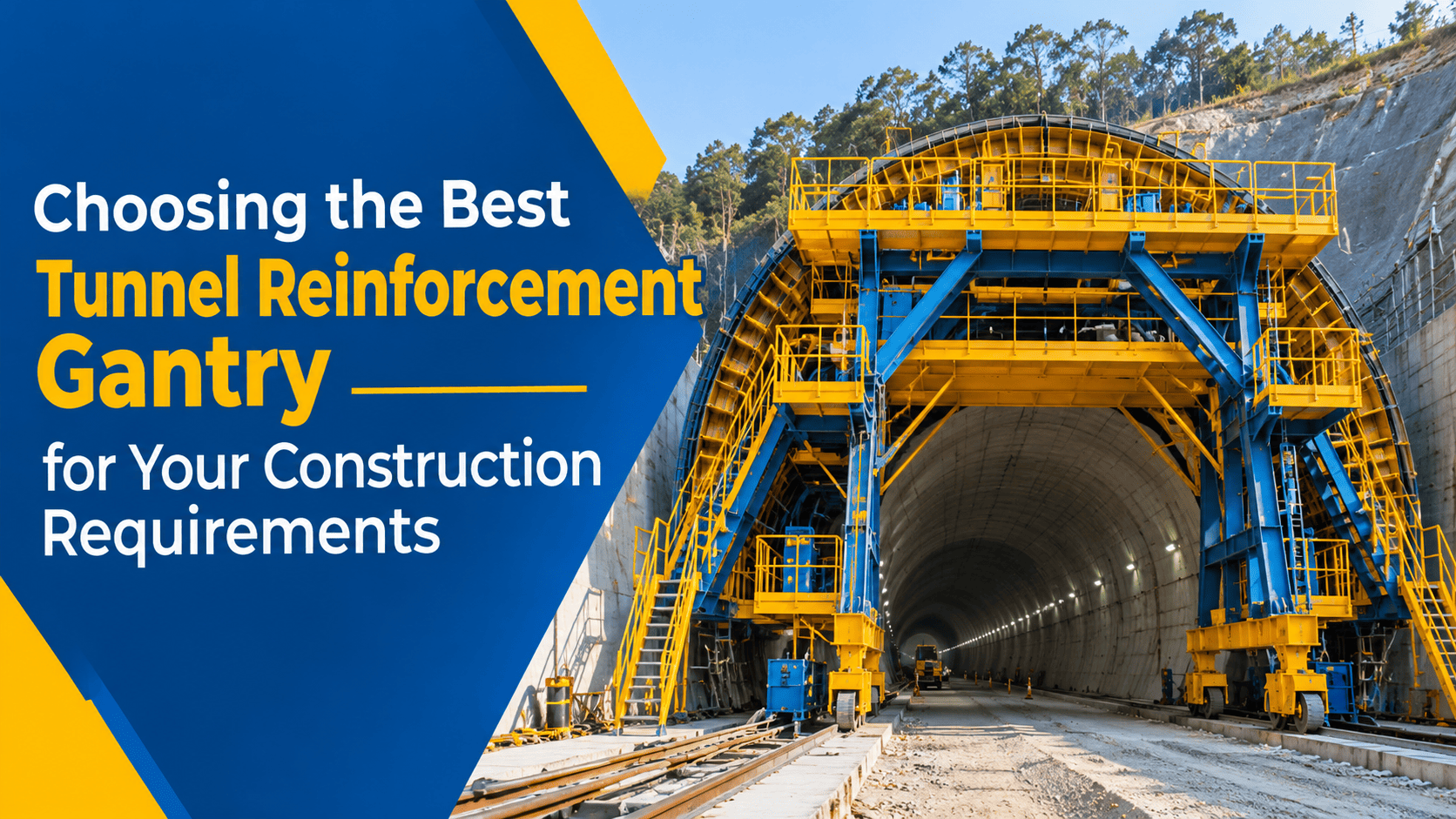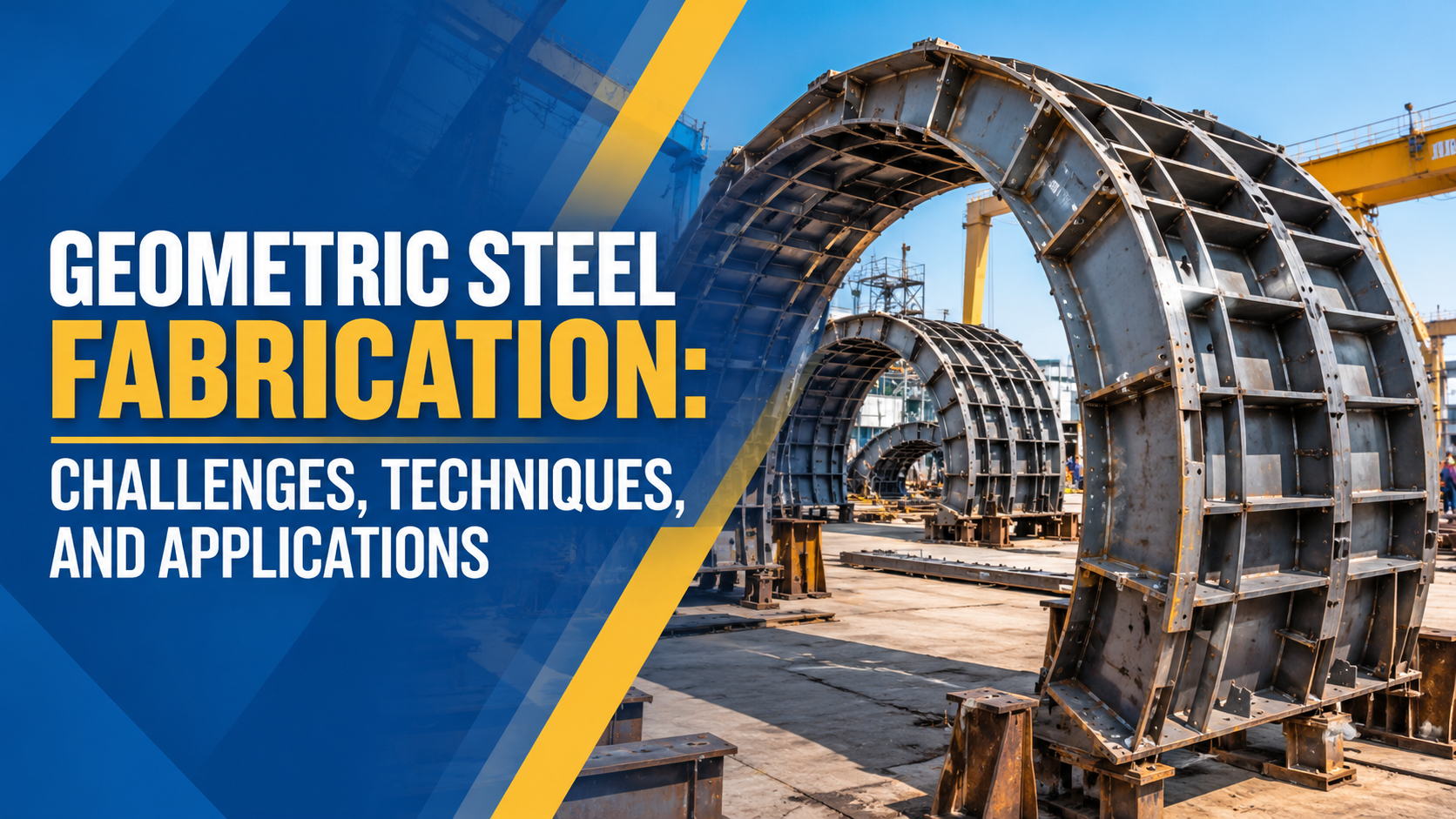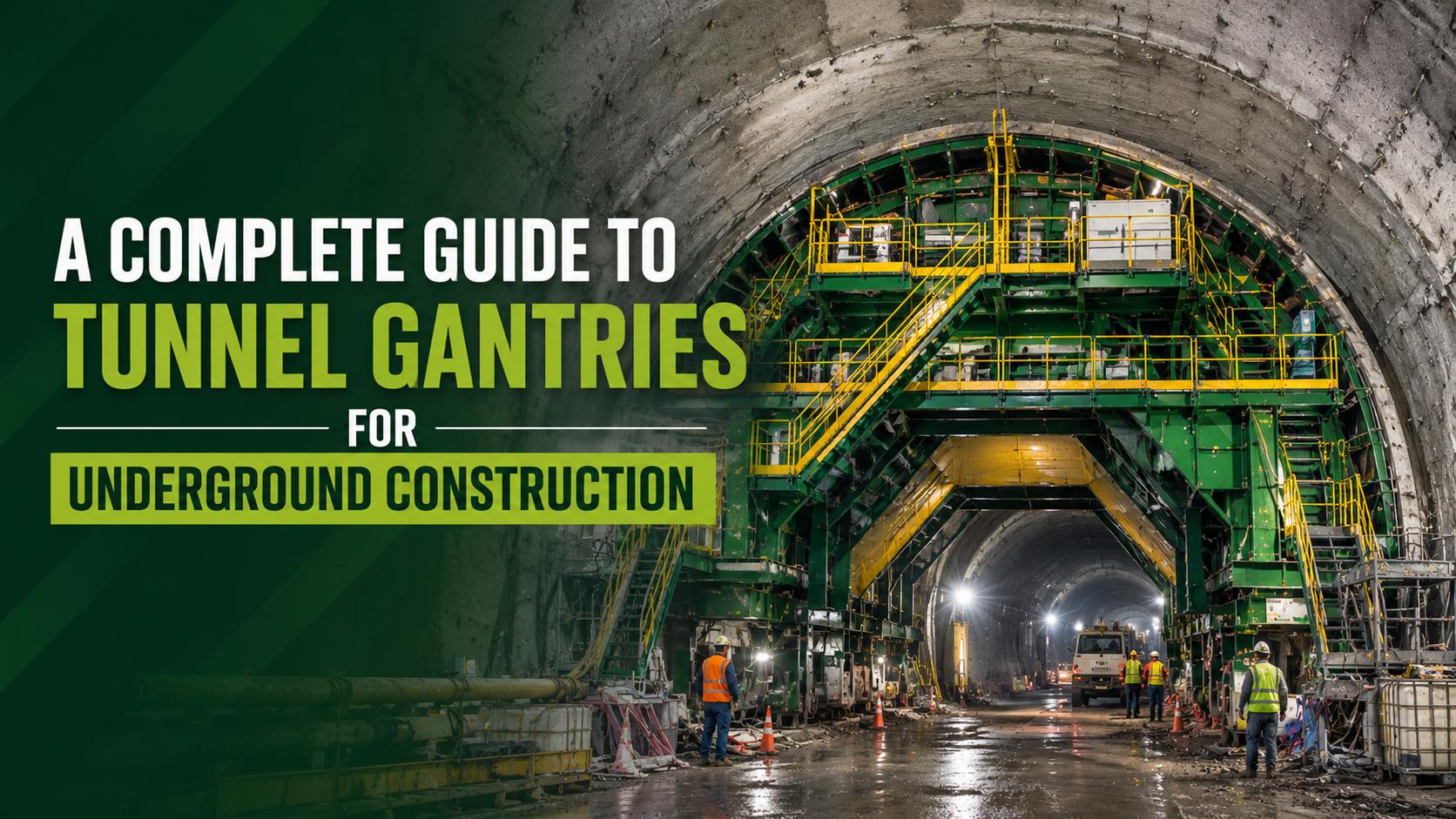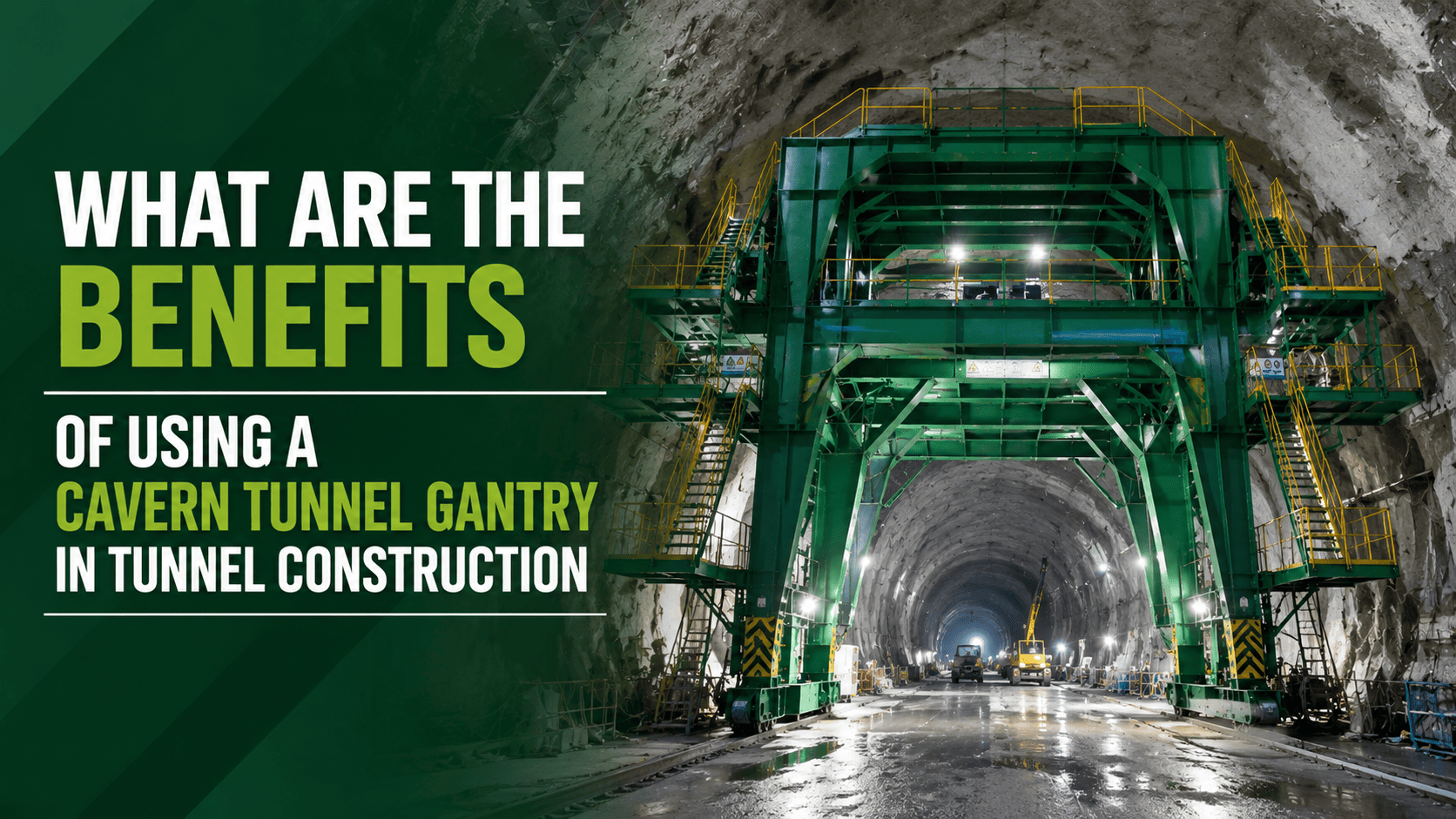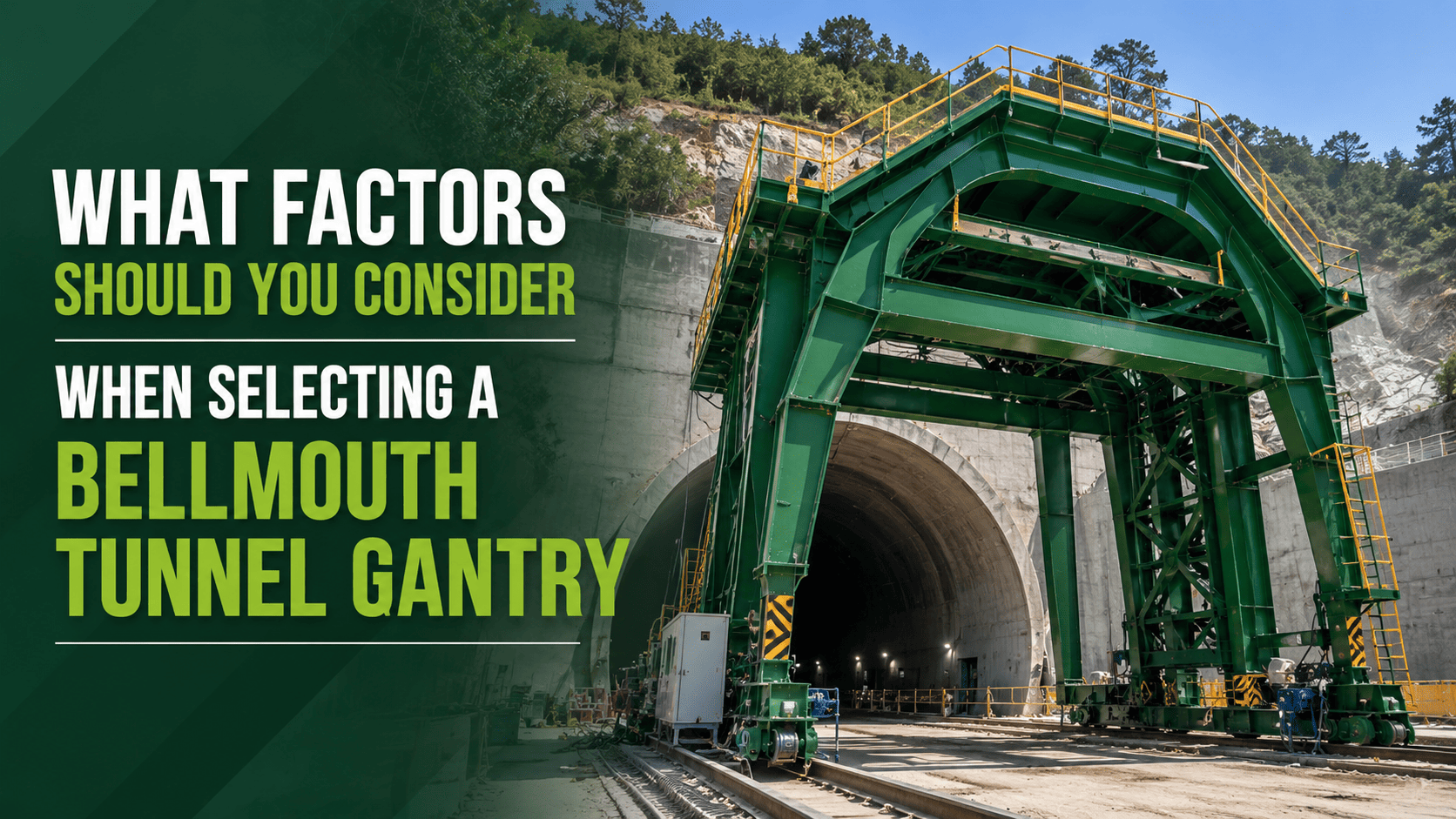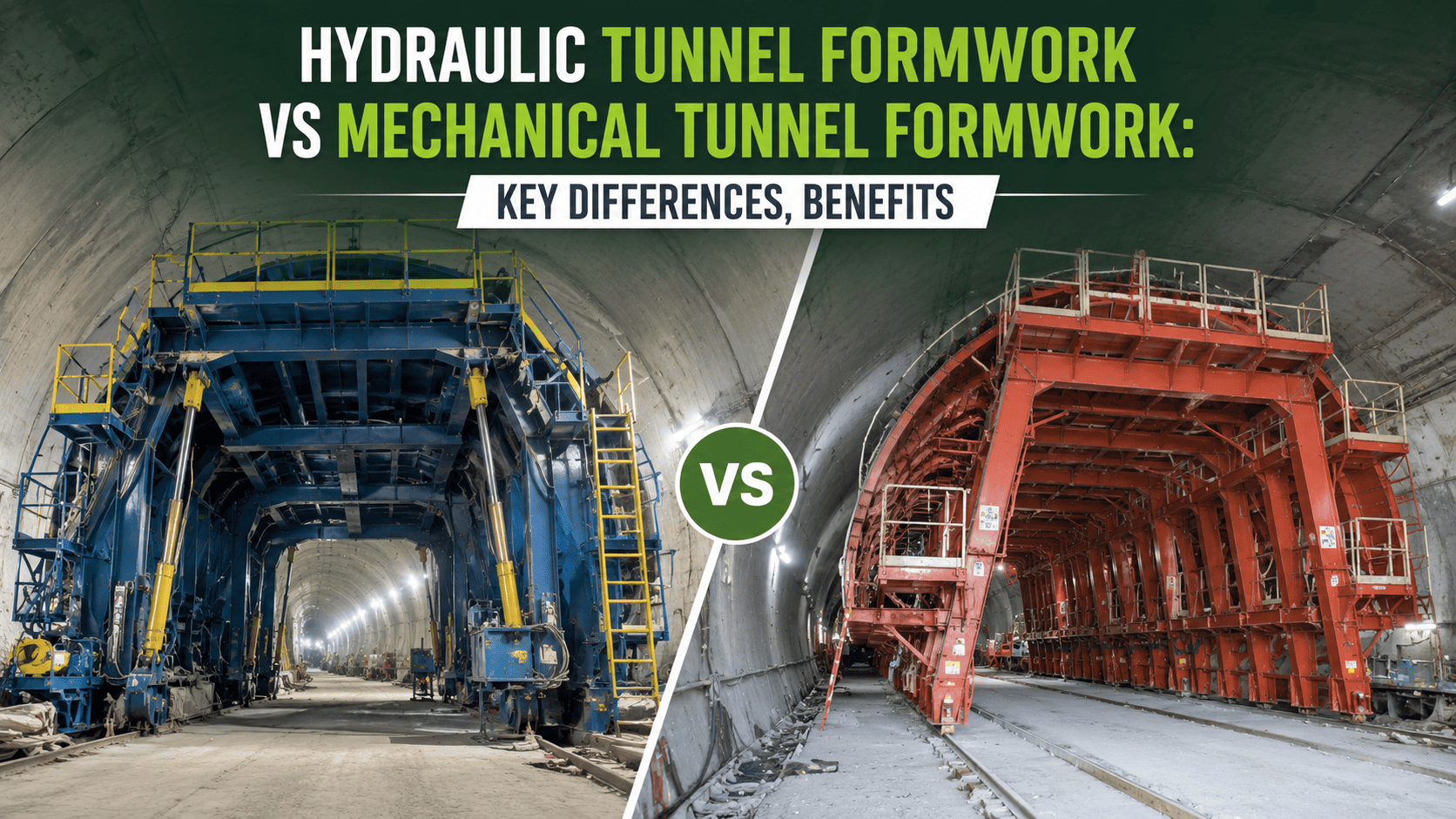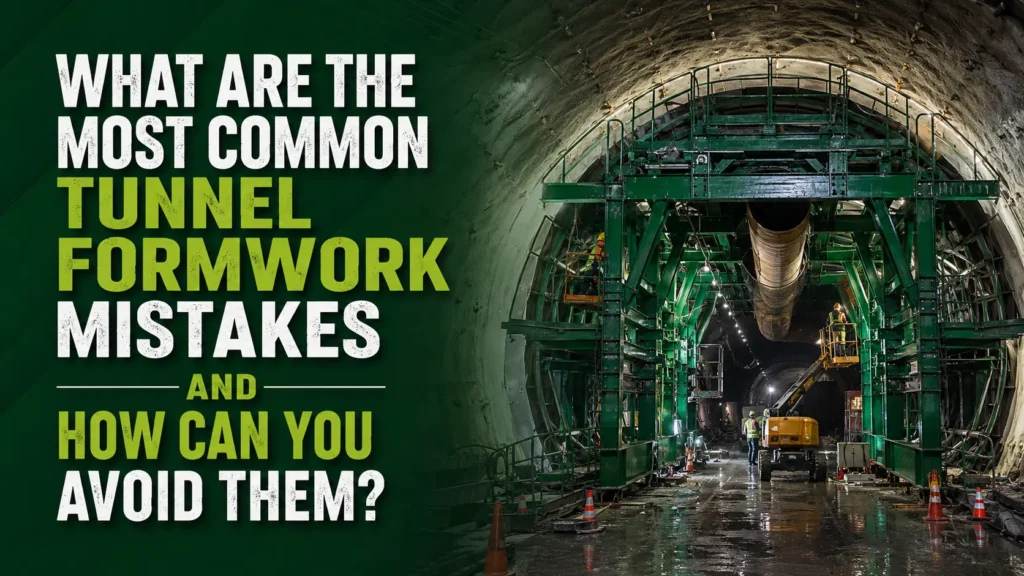
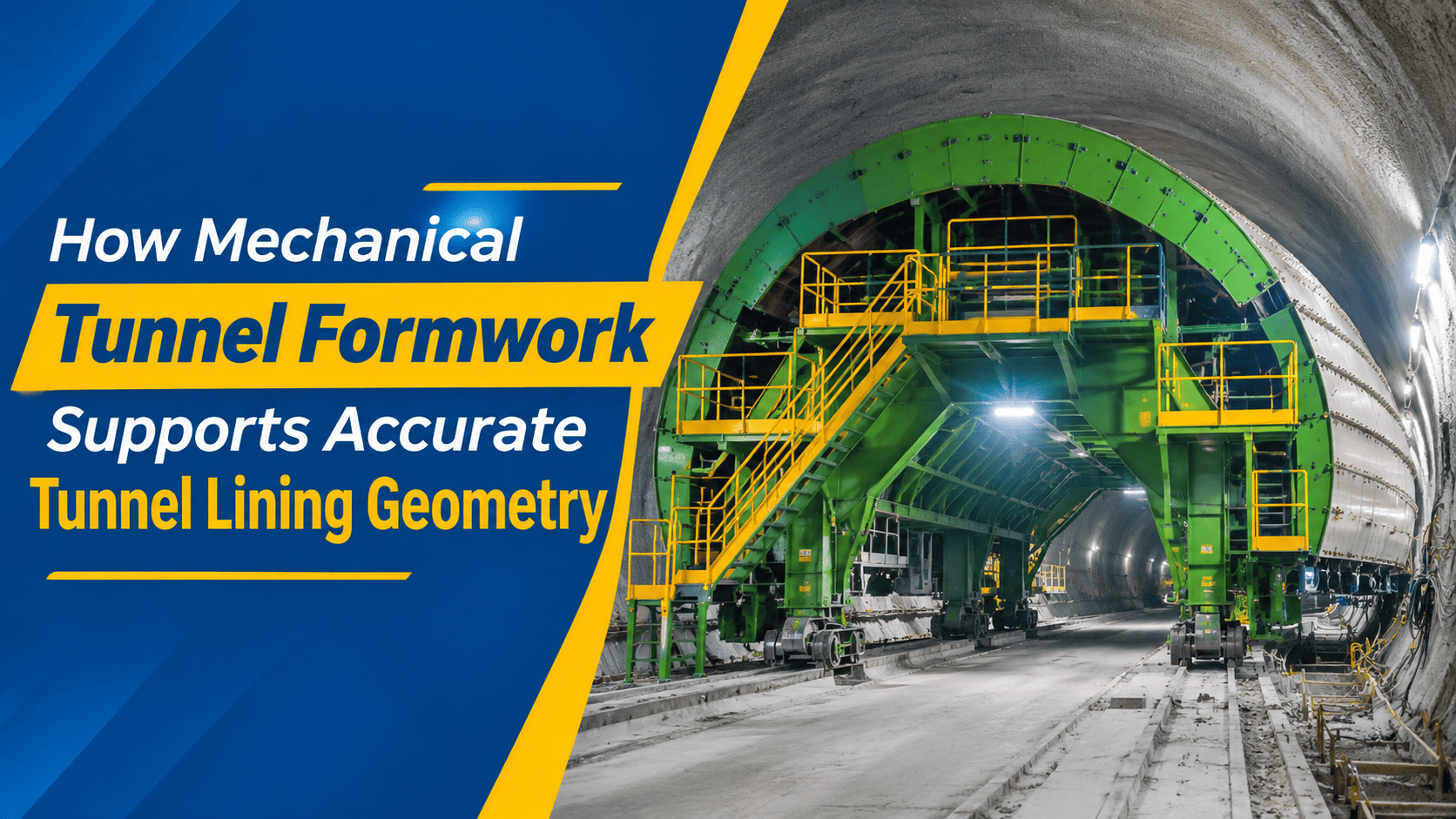
Mechanical tunnel formwork is primarily used to form accurate tunnel lining geometry, ensure formwork stability, and achieve desirable concrete finishes. It is used to create a predictable environment to pour concrete into the tunnel shape, with the ability to accurately maintain the essential diameter, curve and alignment throughout the construction process. Mechanical tunnel formwork is a formwork system that enables efficient, repeated lining operations using adjustable panels, hydraulics, and true-position systems.
Table of Contents
Top Factors to Support Accurate Tunnel Lining Geometry
Key factors that support accurate tunnel lining geometry include:
1. Maintains tunnel size accuracy
For any shape of tunnel (round, horseshoe or rectangular), the lining will need to be formed to follow the cross-section. Slight modifications can affect clearance, water collection, and ducting.
Mechanical tunnel formwork is a steel formwork system designed to maintain the tunnel shape while concrete is poured. A properly designed system lets the contractor keep the width, height, radius, and lining consistent from one tunnel section to the next.
2. Supports PAP: Allows for Accurate Alignment & Positioning
Maintains alignment for a seamless match between neighbouring tunnelling lining sections. Failure to do so results in uneven joints, which lead to surface irregularities that need finishing.
Other features of mechanical tunnel formwork may include hydraulic jacks, adjustable supports, and a system to position the formwork according to survey measurements. Laser ranging machinery and ongoing surveying help maintain the centreline, profile, and elevation as designed.
3. Resists Concrete Pressure After Placing
New concrete pushes against the formwork, and the formwork can be deformed by a poor formwork design or support. This movement alters the tunnel lining’s shape and dimensions from the design.
A quality mechanical tunnel formwork system includes structural frames, stiffeners, and appropriate locking devices to resist these forces. A well-designed support system preserves the surrounding lining shape, especially when it reduces undesirable deformation from concrete placement and vibration.
4. Improves Lining Thickness Consistency
Lining thickness is essential for meeting design specifications and optimising concrete use. Formwork misalignment, excavation shape, or lining shifting can cause off-formwork outcomes. Mechanical tunnel formwork provides the formwork surface against which concrete can be placed, and by aligning the formwork appropriately and using survey controls over the excavation or first liner, contractors can place lining more accurately.
5. Allows for repeated construction cycles
In a standard large tunnel project where most of the profile is cast repeatedly over hundreds of meters, handcrafting and setting up formwork for every position can lead to size inaccuracies.
Mechanical methods certainly use repeatable procedures when you plan to move formwork from one position to another. Hydraulic travel, regulated movements, and off-the-shelf setting checklists (STC) help achieve consistency throughout the casting cycle and reduce manual handling time.
6. Can Provide a Better Concrete Surface Quality
Flat surfaces can only be achieved through precise geometry. If panels are misaligned, connections are loose, or formwork parts are not properly matched up, the result is surface irregularities or unwanted variations in the finished lining.
With proper installation, mechanical tunnel formwork from National Power Engineering Company (NPEC) ensures aligned panel joints and stable formwork during concrete placement. Proper concrete placement, vibration, curing and striking can also ensure the proper surface finish.
The Key Features That Improve Tunnel Lining Accuracy
Key features that improve tunnel lining accuracy include the following.
| Formwork feature | Contribution to accuracy |
| Precision-engineered steel panels | Follows the specified tunnel profile |
| Hydraulic adjustment systems | It supports both controlled positioning and alignment |
| Rigid structural frames | It certainly reduces deformation even under concrete compression |
| Locking & linking methods | Prevents the panels from shifting while casting |
| Instrument and position controls | Helps verify centreline, elevation, and geometry |
| Reusable modular units | Supports consistent results across lining sections |
Best Practices for Accurate Tunnel Lining
To achieve quality outcomes with mechanical tunnel formwork, construction managers need to adopt quality control steps.
-
Check the survey measurements
Check the tunnel centreline, elevation, cross-section, and design size before placing the formwork. Inspect hydraulic systems, structural members, attachments, and surface panels before each casting cycle.
-
Check reinforcement and cover
Verify that reinforcement is correctly placed and that the stipulated cover is provided.
-
Control the risk of concrete placement
Stick to the process and sequence for pouring so that pressure is minimised and formwork movement is less likely to occur.
-
Observe during casting
Observe displacement, leakage or unacceptable deformation while pouring the concrete.
-
Wait for green light
Striking of formwork can only be done once the concrete has hardened sufficiently and when it is according to the specified procedure for its removal.
Conclusion
Mechanical tunnel formwork keeps the tunnel lining shape true by resisting concrete compression and maintaining the tunnel’s design profile, ensuring alignment. It can be duplicated repeatedly for the two lining operations.
Using the right mechanical tunnel formwork for the tunnel shape, conditions, and production needs can improve dimensional control, reduce concrete cracking, and simplify tunnel construction.
Frequently Asked Questions
1. What is mechanical tunnel formwork?
Mechanical tunnel formwork is a system used to form and support concrete tunnel linings as they are cast and set.
2. How does mechanical tunnel formwork improve lining accuracy?
It keeps the standard section profile in the tunnel with the help of rigid panels, supports which can be adjusted and tight positioning.
3. What factors determine tunnel lining geometry?
Tunnel lining geometry (e.g., ring shape, inverts, slope, convergence) is influenced by formwork arrangements, survey accuracy, concrete pressures, reinforcement location, excavation tolerance, and construction quality.