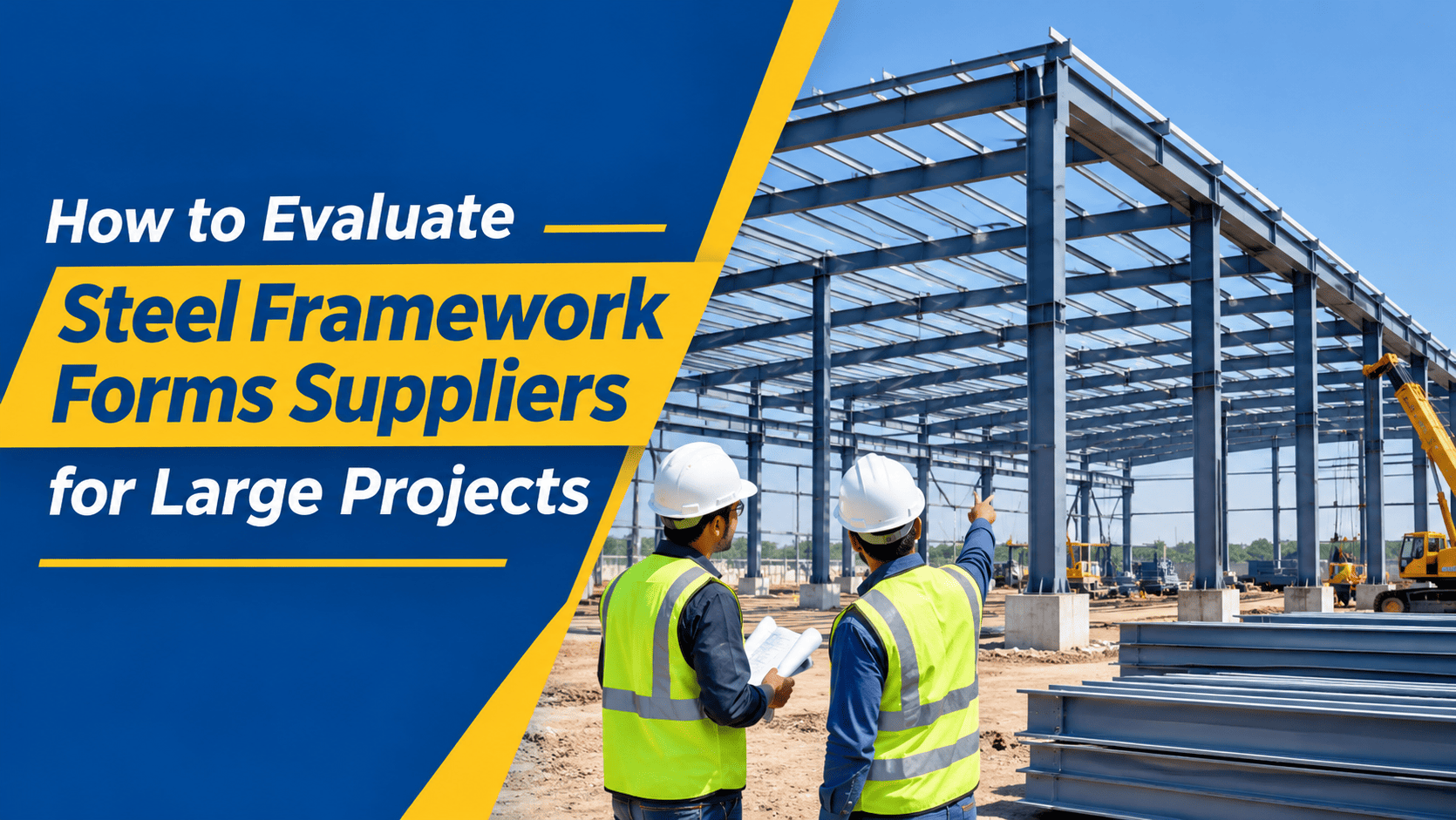
If the building is large, the formwork system must be sturdy, precise, and reliable to ensure the building is constructed quickly and correctly and costs are minimised. However, choosing the right steel framework form supplier is vital for cost control, worker safety, and consistent construction standards. Before selecting a supplier, contractors should consider the supplier’s manufacturing capacity, materials, customisation, lead times, and after-sales service.
Table of Contents
Top 7 Factors to Evaluate Steel Framework Forms Suppliers for Bigger Projects
If you are looking for a steel framework forms supplier like National Power Engineering Company (NPEC) that can construct huge projects, here are some of the most important factors to consider.
1. Check Manufacturing Capabilities
First, determine whether the supplier can meet large-scale construction needs. Therefore, bridges, tunnels, industrial structures, and the like often require large quantities of steel framework forms and quick turnaround times.
If you find another fabricator with equally good personnel, more or less the same welding equipment and sound quality-control procedures, it may be. Some good fabricators can handle large orders without increasing lead time.
2. Assess the steel’s quality and durability
Steel quality is a major factor which affects the strength and stability of the entire formwork system, as well as its service life. Material quality issues or manufacturing discrepancies can cause delays, bulging, twisting, and increased maintenance.
Ask about types and grades of steel, metal identification, joint preparation standards, corrosion prevention and testing. Make sure that the forms you provide are capable of bearing the loads and use you will need for your project.
Can you incorporate a long-life, durable steel structure to reduce replacement frequency and improve long-term cost-effectiveness, particularly in applications that must be cast continuously?
3. Evaluate the provision of Customisation and Design Support
Each major project is unique with its own structural design specifications and details. For more complex shapes, eccentric sizes, and special structural elements, standard formwork components and systems may not be appropriate.
Select a vendor that provides engineering, dimensional accuracy, technical drawings and design. The ability to create shapes to your project’s requirements will eliminate changes, material waste, and on-site installation delays.
If ordering for bridges, tunnels, or industrial construction, you should refer to any projects that the supplier has proven to be successful with in the past.
4. Discuss Quality Assurance and Safety Standards
Quality and safety assurance is the last attribute you should consider when comparing suppliers. Ask for inspection reports or material certificates, welding logs, or quality-management process documents.
Check whether the supplier performs dimensional inspections and checks connections, load-bearing parts, and surface finish. If applicable, ensure that the formwork design has been checked for the following: concrete pressure, formwork support plan and construction site.
Independent testing or third-party inspection may be required for project critical infrastructure.
5. Identify similarities and differences in pricing and total project costs.
Not necessarily the lowest quote. Specs, artistry, customisation costs, shipping, installation, maintenance, and reusability are all factors to consider when comparing vendors for materials.
If the forms are likely to be used often or need repair, the cost can add up. Get several vendors to quote for each item and make sure all quotations are the same specification. This makes it easier to identify hidden charges and level the playing field among vendors.
6. Check Delivery Capacity and Project References
Assembly build-up in this phase may delay the programme or increase the labour and plant costs. Consider production rates and transit, dispatch and delivery timings, as well as the suppliers’ ability to deliver in instalments.
No, please provide examples of past large projects or initiatives with similar approaches. Completed work, customer satisfaction and supplier delivery performance are good measures.
7. Do Consider After-Sales Support
Technical assistance will be required even once the forms get to the site. A knowledgeable supplier should be able to answer questions about field assembly, handling, maintenance, repairs, replacement parts, etc.
Explain in greater detail warranty, spare parts, and dealing with quality problems before the contract is signed.
Conclusion
When evaluating steel framework suppliers, contractors must look beyond the price quote. They need to consider capacity, steel quality, engineering resources, safety standards, delivery performance and future support.
A supplier that meets these requirements can help large projects stay on schedule and on budget while maintaining quality standards. By assessing the project before the purchase, project owners and construction companies can select a dependable partner for their infrastructure and industrial projects.
Frequently Asked Questions
1. What to verify when choosing the appropriate steel framework types supplier?
Select a supplier based on the overall quality of their materials, the size of their production run, how well they can customise an installation, the safety paperwork they provide, the delivery schedule, and their experience on previous projects.
2. Why is steel quality important in formwork systems?
Good steel ensures formwork can be reused many times, stays true to shape and requires minimal maintenance.
3. Is it worth sourcing the cheapest formwork?
No. The contractor should consider the total project cost, including durability, transportation, installation, maintenance, and replacement.