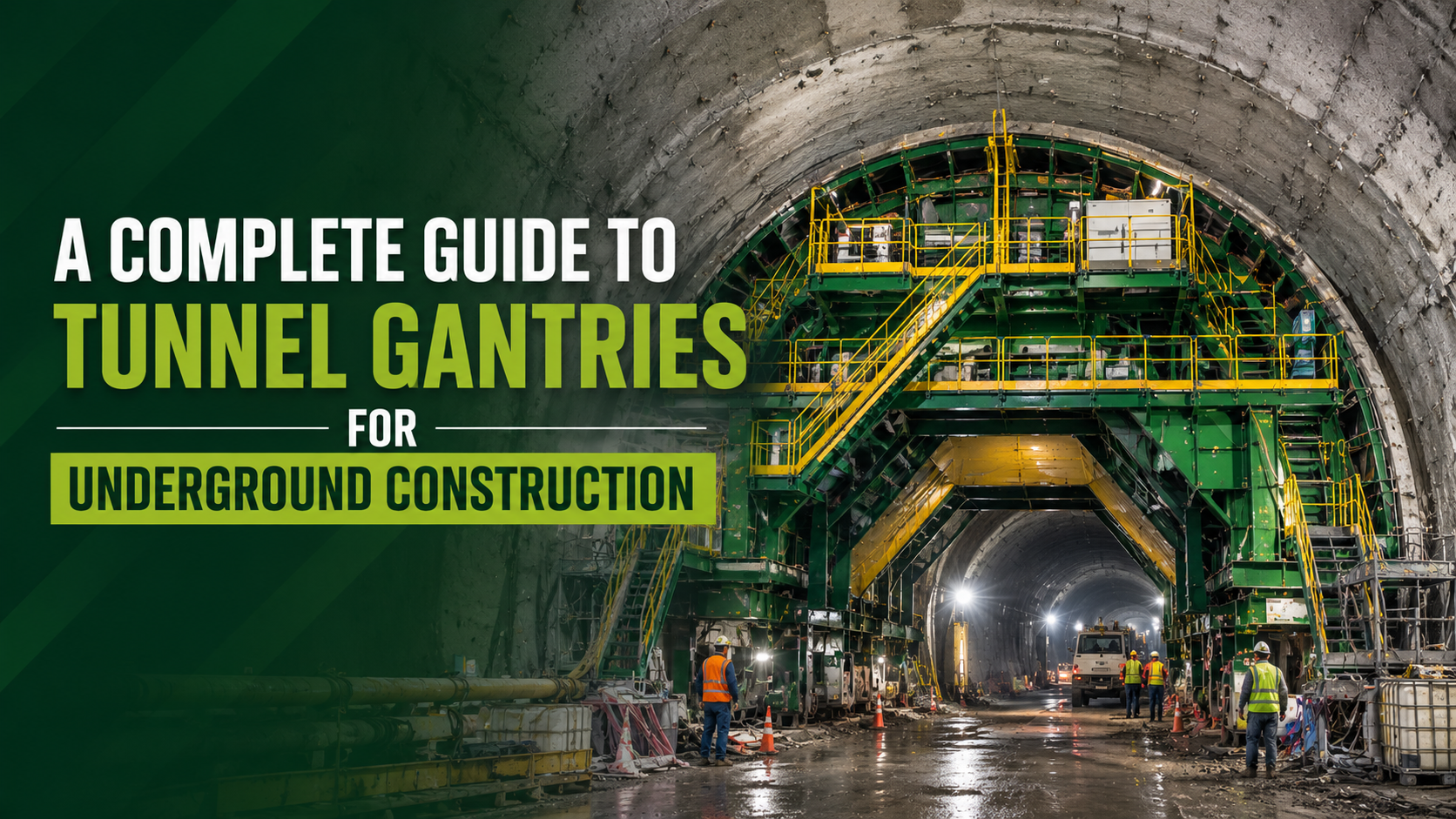
Tunnel construction equipment must support the wide range of demanding tasks involved in a tunnel project, including excavation, reinforcement, concrete lining, material transportation, and services within confined underground environments.
A tunnel gantry is a key framework structure that supports and sequences these activities while enabling the tunnelling process to progress along the tunnel alignment. Contractors need to consider the best gantry-in-tunnel applications to improve access, workflow, safety, and construction productivity.
Table of Contents
What Is a Tunnel Gantry?
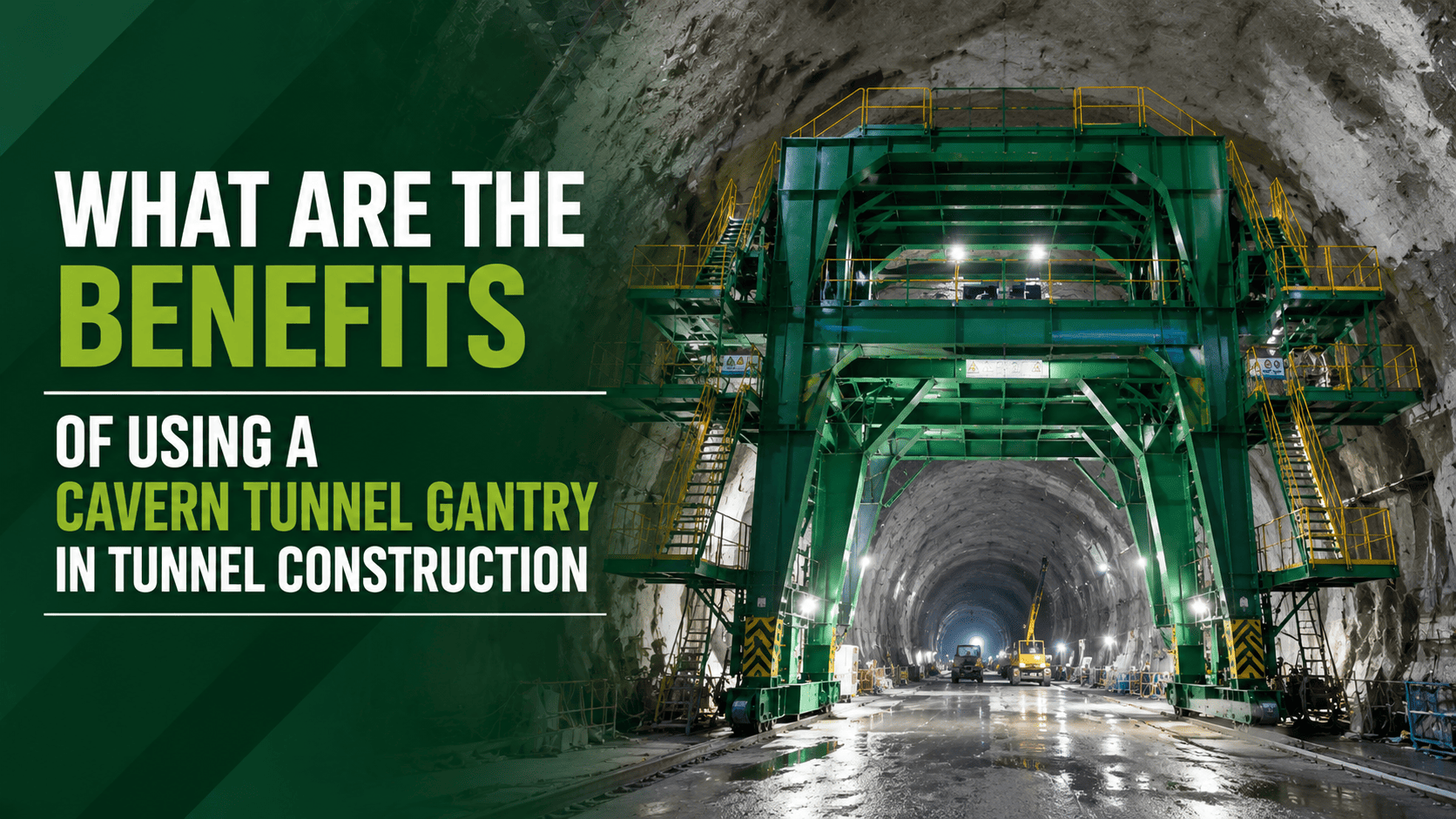
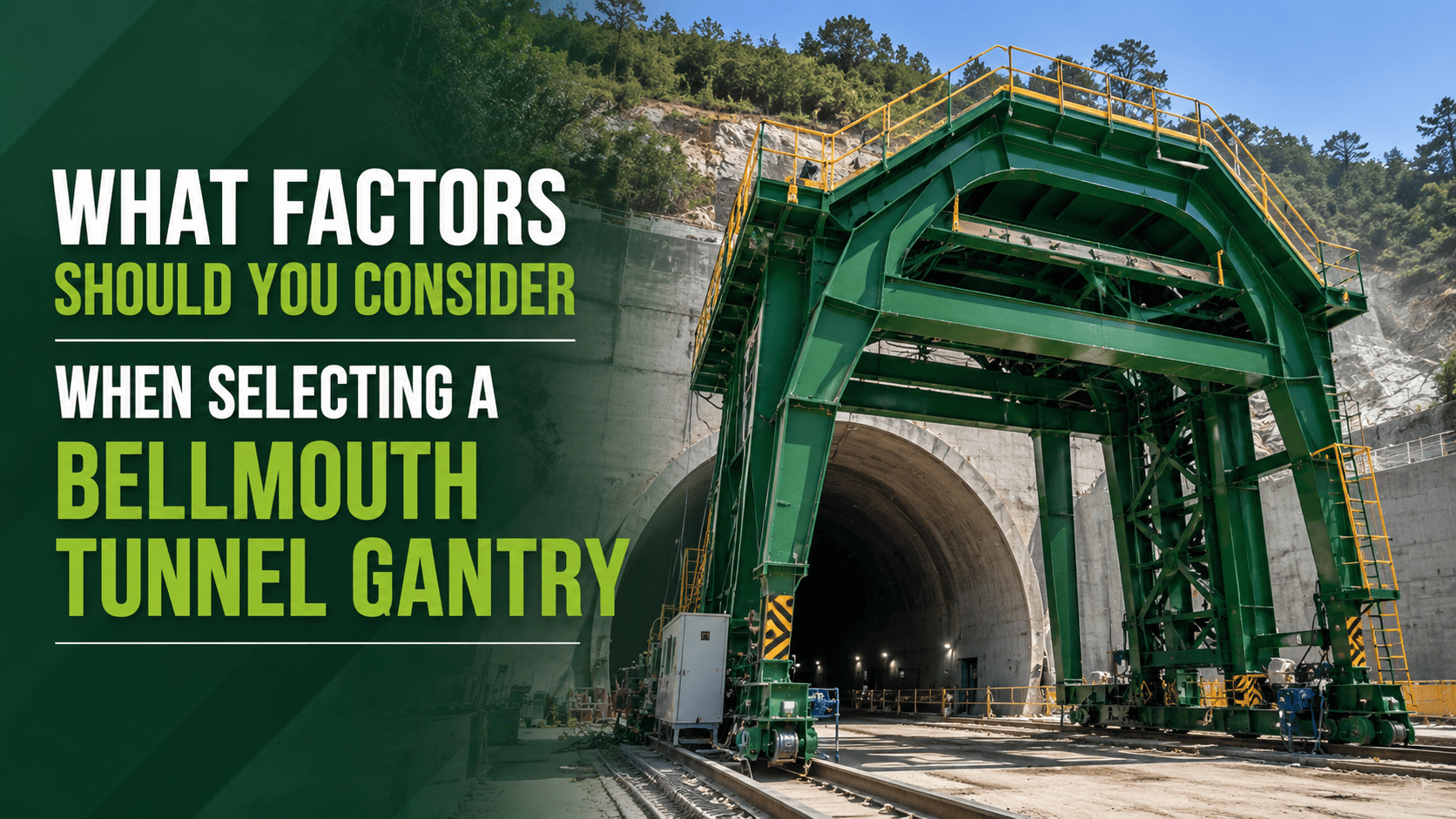
A tunnel gantry is a massive steel structure that can be erected in the tunnel or externally to support work inside the tunnel. Depending on project needs, it can support equipment, platforms, piping, reinforcement work, formwork, and other temporary construction services.
Tunnel gantries are versatile for lining, finishing, or other jobs where you need to support the working surface while moving teams and equipment inside the tunnel. Tunnel gantry size, configuration, load-carrying capacity and travel system are generally customised to the tunnel’s shape and construction.
Why Is a Gantry In Tunnel Construction Important?
Underground construction has very limited space to operate and time to coordinate different activities. A well-designed gantry can create work platforms inside a tunnel, potentially reducing conflicts with other construction work.
Some of the Key benefits include:
- Better use of limited tunnel space
- Stable platforms for construction activities
- Improved access to tunnel surfaces
- Support for lining and reinforcement work
- Easier movement of workers and equipment
- Improved coordination between different construction stages
- Custom-designed to the dimensions of the tunnel and other project needs.
Thus, a tunnel gantry can become an integral part of the construction system, especially on projects with numerous tunnel sections and lining works.
Major Applications of Tunnel Gantries
Tunnel gantries are available in different designs to meet various underground construction needs. Tunnel lining gantries are mounted around the tunnel lining to support the structure. Gantry cranes may be used for reinforcement and other concrete-related tasks, such as overhead support for workers, materials, and machinery during construction. Depending on the design, the gantry can also support pipelines, electrical lines, ventilation installations, or other interim systems.
The gantry layout can also be designed based on the construction sequence and site conditions of projects such as irrigation tunnels, railway tunnels, road tunnels, box structures, and other underground projects.
Types and Configurations
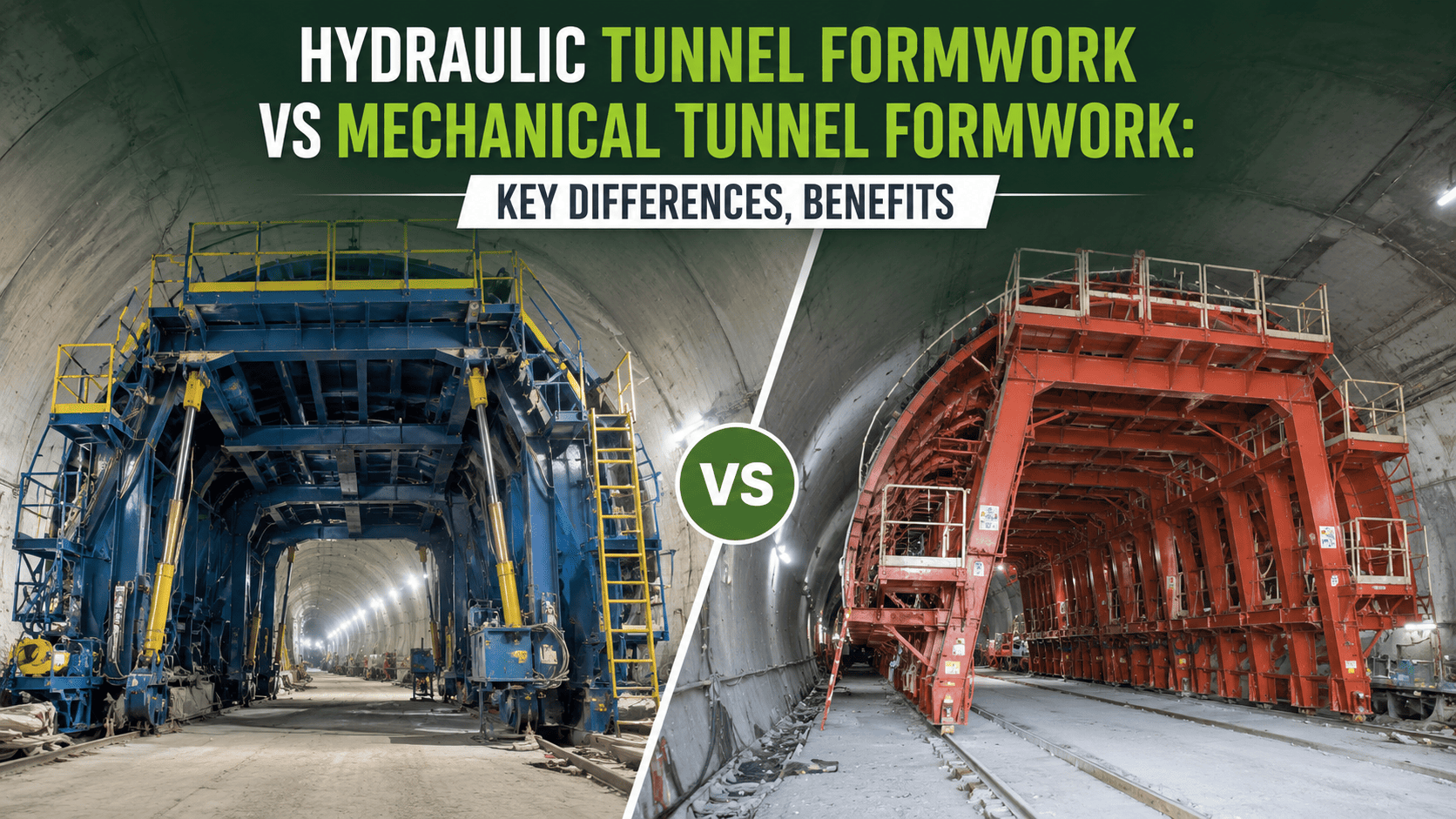
Tunnel gantries cannot be a one-size-fits-all solution for all underground projects. They can be mechanical, hydraulic or self-propelled.
The selection depends on factors such as:
- Tunnel diameter and cross-section
- Required lining thickness
- Tunnel length
- Working height
- Required load capacity
- Construction methodology
- Movement requirements
- Available underground space
For instance, one project may need a long gantry for several working platforms and construction services, while another may require a compact arrangement for a smaller tunnel profile.
Tunnel Gantry for Lining Operations
Lining is another critical phase during which a gantry in the tunnel can offer significant operational benefits. The gantry can provide access to the tunnel lining and surface while still accommodating construction crews and machinery.
The gantry can be synchronised with the lining system to allow a systematic sequential advancement along the tunnel. Design considerations include tunnelling profile, lining thickness, working clearances, and loads arising during construction.
If the lining process and gantry are well matched, the flow can be more streamlined with less equipment tracking.
Key Design Considerations
Engineers should understand the actual project requirements before buying or manufacturing a tunnel gantry. Tunnel geometry is important because it must allow adequate clearance without limiting other construction activities.
Load requirements also need to be considered. For instance, the gantry could support workers, tools, equipment, pipelines, platforms, and a number of temporary services. The structural design must incorporate these operating and working loads.
“Movement is another area to consider: does the gantry need to move? This again depends entirely on the project; does the gantry move mechanically, hydraulically operated, or self-propelled through the tunnel.”
NPEC Tunnel Gantry Solutions
NPEC (National Power Engineering Company ) offers engineered formwork and gantry equipment for complex underground and infrastructure projects. The tunnel and bridge formwork features are based on gantries that utilise the as-built tunnel shape, lining pattern, rebar work, and construction parameters.
A project-specific approach is important because tunnel dimensions and construction processes vary widely in practice. In addition, the gantry can be designed by combining considerations of the tunnel profile, working platform, motion mechanism, and construction sequence.
Conclusion
A tunnel gantry isn’t only a temporary steel structure – it’s a working system in underground construction. A tunnel gantry supports gantry erection and demobilisation, underpinning, lining, reinforcement, access, and service support. Once you know your diameter, loads, movements, lining, and construction method, you’ll be well positioned to select the right tunnel gantry.
FAQs
1. What is a Tunnel Gantry?
A Tunnel Gantry supports tunnel construction activities such as building, lining, stabilising, reinforcement, and more.
2. How is a Gantry in a Tunnel designed?
It is designed according to the tunnel geometry, lining specifications, load capacity, working clearance, movement mechanism, and construction method.
3. Does NPEC offer TGP solutions based on projects?
Yes, NPEC constructs engineered gantry and formwork solutions tailored to the conditions of each underground construction project.